The UK hot air balloon season runs from March to October. Flights take off early in the morning and in the evening, when the wind is calmest. Summer has the most flying days, but spring and autumn often bring the clearest views. Here's how the season works, month by month, and how to give yourself the best chance of flying.
When is hot air balloon season in the UK?
Most balloon operators in the UK fly from the start of March to the end of October. Some areas start a little later, in April, and a few operators keep flying through the autumn and winter on calm, clear days.
Within the season, balloons only fly at two times of day:
- Morning: about an hour after sunrise
- Evening: about two to three hours before sunset
Balloons don't fly in the middle of the day in summer. As the sun heats the ground, it creates rising currents of warm air, called thermals, and gusty winds, which make it unsafe to fly. The early morning and evening air is calm and steady, which is exactly what a balloon needs.
The best time of year for a balloon ride, month by month
Meeting times move with sunrise and sunset, so they change a lot through the year. These are typical meeting times in the south of England. Your operator confirms the exact time before your flight.
| Month | Morning meet | Evening meet | What to expect |
|---|
| March | about 6:30am | about 3:30pm | The season opens. Crisp, clear mornings, sometimes with frost on the fields. |
| April | about 6:15am | about 5:15pm | Spring green countryside and lambs in the fields. Showery weather can mean more rebooking. |
| May | about 5:45am | about 6pm | Long evenings, blossom and bluebells. A popular month to fly. |
| June | about 5:30am | about 6:30pm | The longest days. Sunrise flights mean very early starts. |
| July | about 5:45am | about 6:30pm | Warm evenings. Hot afternoons can make evening flights less likely. |
| August | about 6am | about 6pm | Peak holiday season and the Bristol balloon fiesta. Book early. |
| September | about 6:30am | about 5pm | Often settled weather, with golden light and harvest-time fields. |
| October | about 7am | about 4pm | Autumn colours. Late in the month, some flights move to the middle of the day. |
| November to February | only some operators, on calm days | Short days and changeable weather, but stunning frosty views when conditions allow. |
Is summer the best time to fly?
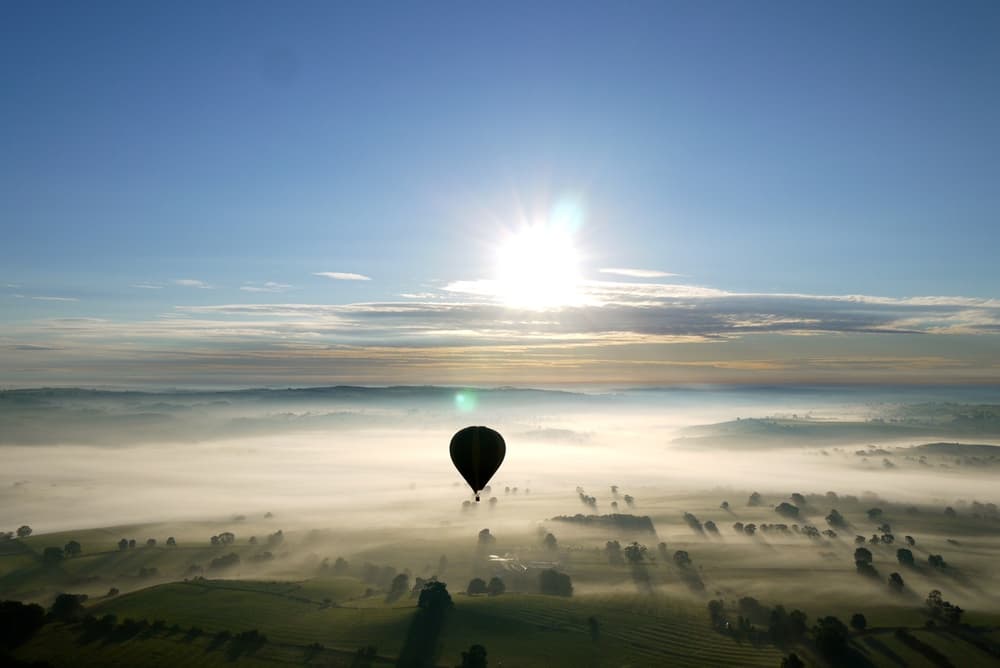
Summer has the most settled weather and the most flying days, so you're more likely to fly on your first attempt. But it isn't always the best for views. Spring and early autumn often have clearer air, and misty autumn mornings with the sun rising over the fields are many pilots' favourite flights.
Sunrise or sunset: which is better?
Both are beautiful, and the ride itself is the same. Morning flights generally have a better chance of going ahead, because the air is at its calmest after a cool night. On hot summer days, the air can still be unsettled in the evening, so evening flights are cancelled a little more often. If you can manage an early start, a sunrise flight gives you the best odds.
What weather do hot air balloons need?
A balloon needs four things to fly safely:
- Light winds: usually less than about 8 to 10mph at ground level. Stronger winds make take-off and landing unsafe.
- Good visibility: the pilot needs to see the ground clearly to pick a landing field.
- Dry weather: no rain or showers forecast during the flight.
- Firm ground: so the ground crew can reach the landing field with the trailer.
Pilots make the final decision on the day, using detailed aviation forecasts. If they cancel your flight, it's because one of these conditions isn't right, and safety always comes first.
Can hot air balloons fly in the rain?
No. Rain cools the hot air inside the balloon, so the pilot has to burn much harder to stay level, and a wet envelope becomes heavy and harder to control. Showers also usually come with gusty winds. Passing summer showers often die away in the evening, though, so a wet afternoon doesn't always mean a cancelled evening flight.
Can hot air balloons fly in hot weather?
Yes, but only at the cooler ends of the day. Heat creates thermals and gusts, which is why balloons don't fly around midday. On very hot days, even evening flights can be cancelled if the air stays unsettled. A balloon also generates less lift when the outside air is hot, so on the hottest days a pilot may carry fewer passengers.
Can you fly in a hot air balloon in winter?
Some operators do fly between November and February, on calm, clear days, often later in the morning because the sun rises later. Winter flights can be spectacular, with frost on the fields and very long views, but there are fewer suitable days, so most vouchers are used between March and October.
How to give yourself the best chance of flying
British weather is unpredictable, and having to rebook once or twice is completely normal. Most people fly within a few attempts. These steps help:
- Book early in the season. If your first date is cancelled, you'll have plenty of time to rebook before the end of October.
- Choose morning flights if you can. They have the best chance of going ahead.
- Pick a flexible voucher if you can only fly at weekends. More available days means more chances to fly.
- Don't leave it until autumn. Vouchers are valid for 12 months, but the last weeks of the season book up quickly.
- Check the flight line the evening before a morning flight, or on the day of an evening flight, as your operator tells you.
Ready to plan your flight? See our balloon ride locations, read our hot air balloon FAQs, or buy a balloon ride voucher. It makes a great gift, and the person you're treating chooses their own date.